
Why Woodworking Feels Different From Other Hobbies

Woodworking is more than cutting wood.
It is the process of turning an idea into something real—something you can touch, use, improve, and proudly keep for years.
Unlike hobbies that disappear when the moment ends, woodworking leaves behind something tangible:
a table built by hand
a shelf made for your home
a gift created for someone important
a workshop project that teaches lasting skills
For many people, that is where the joy begins.
The satisfaction of seeing raw wood become something useful creates a kind of reward that few hobbies offer.
Many beginners also discover that woodworking becomes deeply personal. A simple box, bench, or workbench often becomes the start of a much bigger journey.
As many beginner woodworking communities point out, most people start with simple projects and quickly realize they do not need a massive shop to begin—just a few basic tools and a willingness to learn.
Woodworking as a Creative Escape
Building Something Clears the Mind

Modern life is noisy.
Screens, notifications, deadlines, and constant distractions make it difficult to slow down.
Woodworking creates the opposite experience.
When measuring, cutting, sanding, or fitting joints, focus becomes natural. Your attention moves to the task in front of you.
This is one reason so many people describe woodworking as relaxing.
It combines:
- concentration
- movement
- problem-solving
- visible progress
That combination helps reduce mental clutter.
Many woodworkers describe time in the workshop as the place where they think most clearly.
It becomes less about productivity—and more about presence.
Creativity Without Perfection

Woodworking also teaches an important lesson:
Perfect is not required.
Every project improves skills.
Every mistake teaches something useful.
That makes woodworking accessible.
You do not need to be an expert to enjoy it.
Even small beginner projects like cutting boards, planter boxes, shelves, and benches can create huge confidence because they prove one thing:
You made it yourself.
Practical Skills That Stay for Life

Learning by Building
Woodworking teaches skills that remain useful forever.
You learn:
- measuring accurately
- planning before cutting
- understanding materials
- solving structural problems
- patience and precision
- tool safety and workshop discipline
These are not temporary lessons.
They improve DIY confidence in every area of home improvement.
Even people who start woodworking “just as a hobby” often find themselves building:
- storage solutions
- home repairs
- custom furniture
- workshop upgrades
- outdoor projects
The hobby becomes practical very quickly.
Free beginner woodworking courses often focus on this exact progression: simple projects first, then transferable lifelong skills.
Why Beginners Get Hooked So Fast
Small Wins Create Big Motivation
Most people do not fall in love with woodworking because of advanced furniture.
They get hooked because of the first small win.
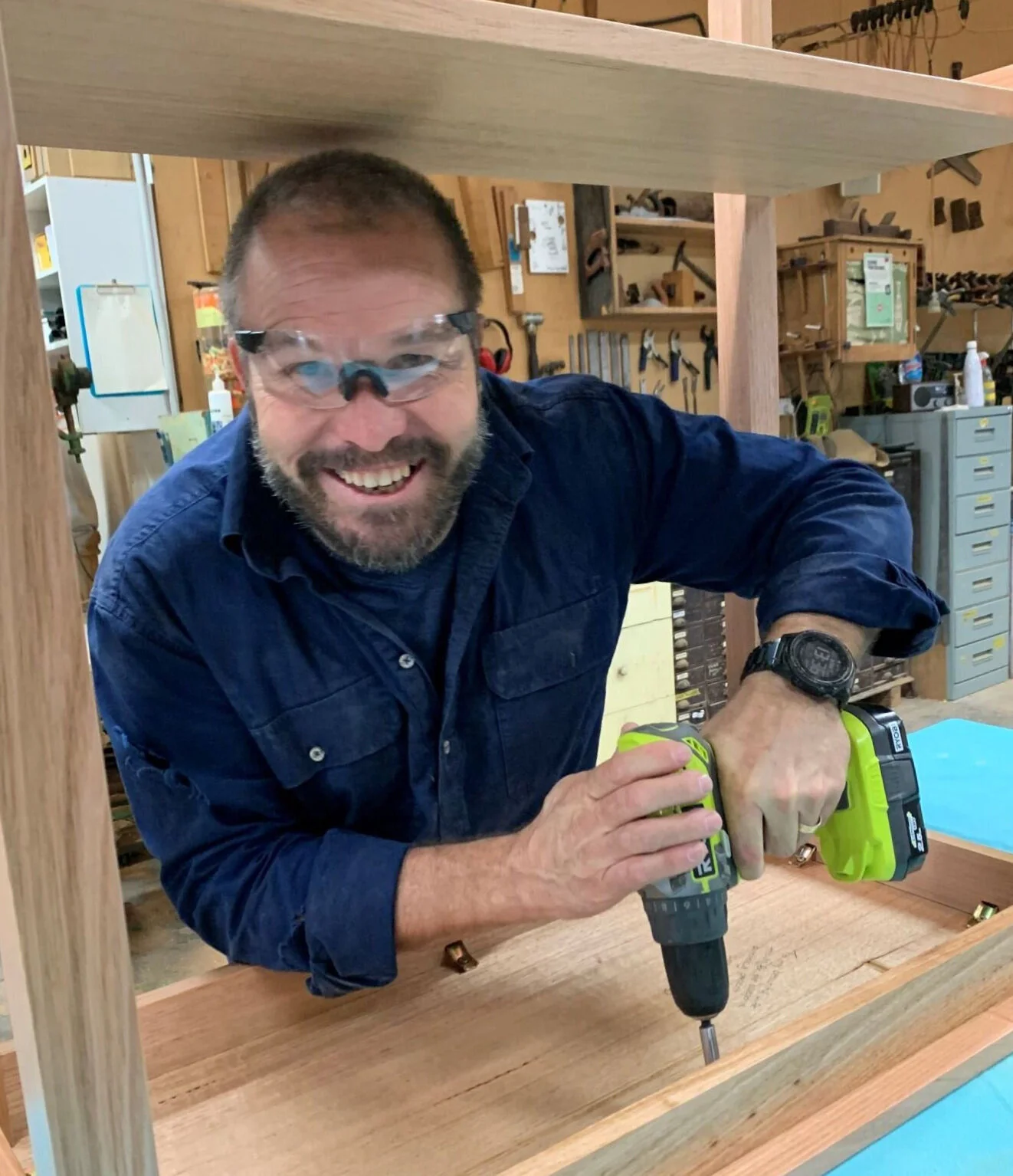
Maybe it is:
- a clean shelf
- a simple workbench
- a handmade mallet
- a cutting board
- a storage bench
That first completed project changes everything.
You stop thinking:
“I wish I could build things.”
And start thinking:
“I can do this.”
Many beginner woodworkers recommend starting with quick, useful projects instead of large complicated builds because early success builds confidence faster.
That confidence creates momentum.
And momentum creates long-term passion.
Woodworking Builds More Than Projects
Confidence, Patience, and Pride
Woodworking quietly builds personal discipline.
You learn:
- patience when glue-ups take time
- humility when measurements go wrong
- persistence when projects need rebuilding
- confidence when results improve
There is pride in building something with your own hands.
Not because it is perfect.
Because it is yours.
This is why woodworking often becomes more than a hobby.
It becomes a way of thinking.
Solve problems. Improve systems. Build better next time.
That mindset extends far beyond the workshop.
Starting Woodworking Does Not Require a Huge Budget
Begin With Simple Tools
One of the biggest myths is that woodworking requires an expensive professional shop.
It does not.
Most beginners can start with:
- a drill
- a circular saw
- a measuring tape
- clamps
- a sander
- a simple work surface
That is enough to build real projects.
Even experienced communities often remind beginners that nobody starts with a full workshop—most people build gradually as skills grow.
The goal is not owning every tool.
The goal is to learn how to use the right tools well.
Frequently Asked Questions
Is woodworking a good hobby for beginners?
Yes.
Woodworking is beginner-friendly because progress is visible and practical. Starting with small projects helps build confidence quickly.
Is woodworking expensive to start?
Not necessarily.
A basic beginner setup can be simple and affordable. Many people start with only a few essential tools and upgrade later.
What is the best first woodworking project?
Simple and useful projects work best:
- shelves
- cutting boards
- planter boxes
- workbenches
- small storage boxes
The best first project is one you will actually use.
Why do people enjoy woodworking so much?
Because it combines creativity, practical skill, and visible results.
Few hobbies offer both relaxation and something useful at the end.
Final Thoughts
The joy of woodworking is not just in the finished project.
It is in the process.
The measuring.
The mistakes.
The adjustments.
The learning.
The quiet satisfaction of building something real.
Woodworking teaches patience.
It rewards effort.
And it turns simple pieces of wood into something meaningful.
That is why so many people start with one small project…
and never really stop.


